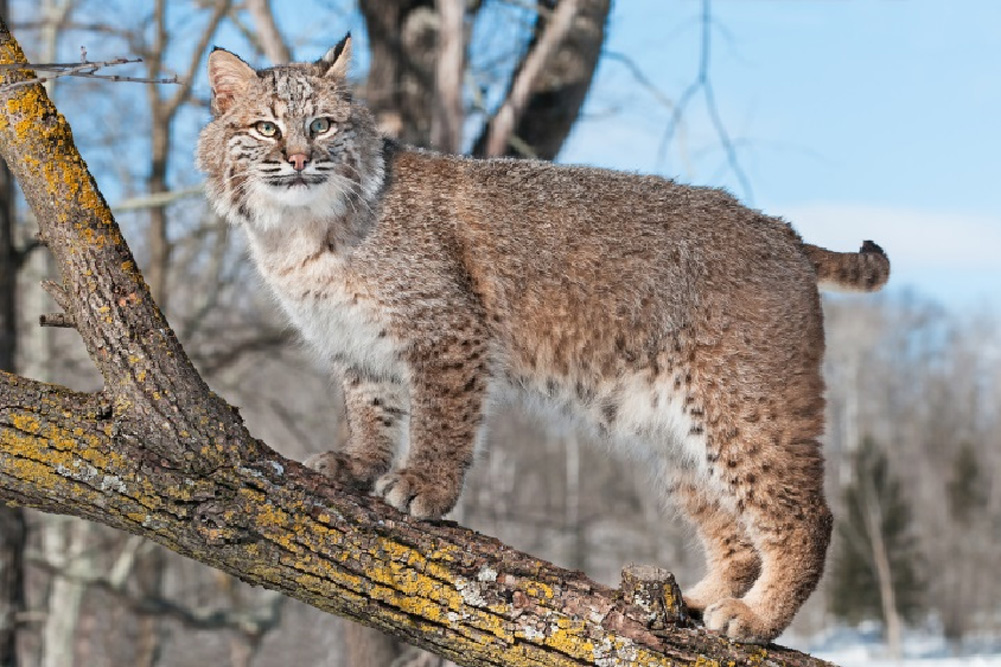
Bobcat Project
Western States Bobcat Project
Project Partner: Wildlife Ecology Institute
SCIF Investment: $77,000 funded by the Hunter Legacy Fund
SCIF Involvement: 2017-2019
Project Summary
Bobcat populations in the U.S. have increased in abundance and distribution in recent decades, however population modeling efforts are lacking for various reasons. A common management practice is for many wildlife agencies to collect harvest data from hunters and trappers, including for meeting requirements associated with the Convention on International Trade in Endangered Species of Wild Fauna and Flora (CITES).
Wildlife Ecology Institute is working directly with state wildlife agencies to use bobcat harvest (and other) data to assess bobcat populations and harvest through this substantial multi-state effort. Bobcats serve as an ideal example for a multi-state approach that utilizes available data and acceptable analytical methods for estimating populations contributing to assist wildlife managers to use the best available science for decision making.
Want to learn more details, click here – Bobcat Population Estimation
Want to watch a video on this information; click here – Bobcat Webinar 10-4-18 on Vimeo