Mozambique Anti-poaching Project
Species involved: Rhino
Project Partners: The GEOS Foundation and the Dyck Advisory Group Conservation Trust
SCIF Investment: $50,000
SCIF Involvement: 2015-2018
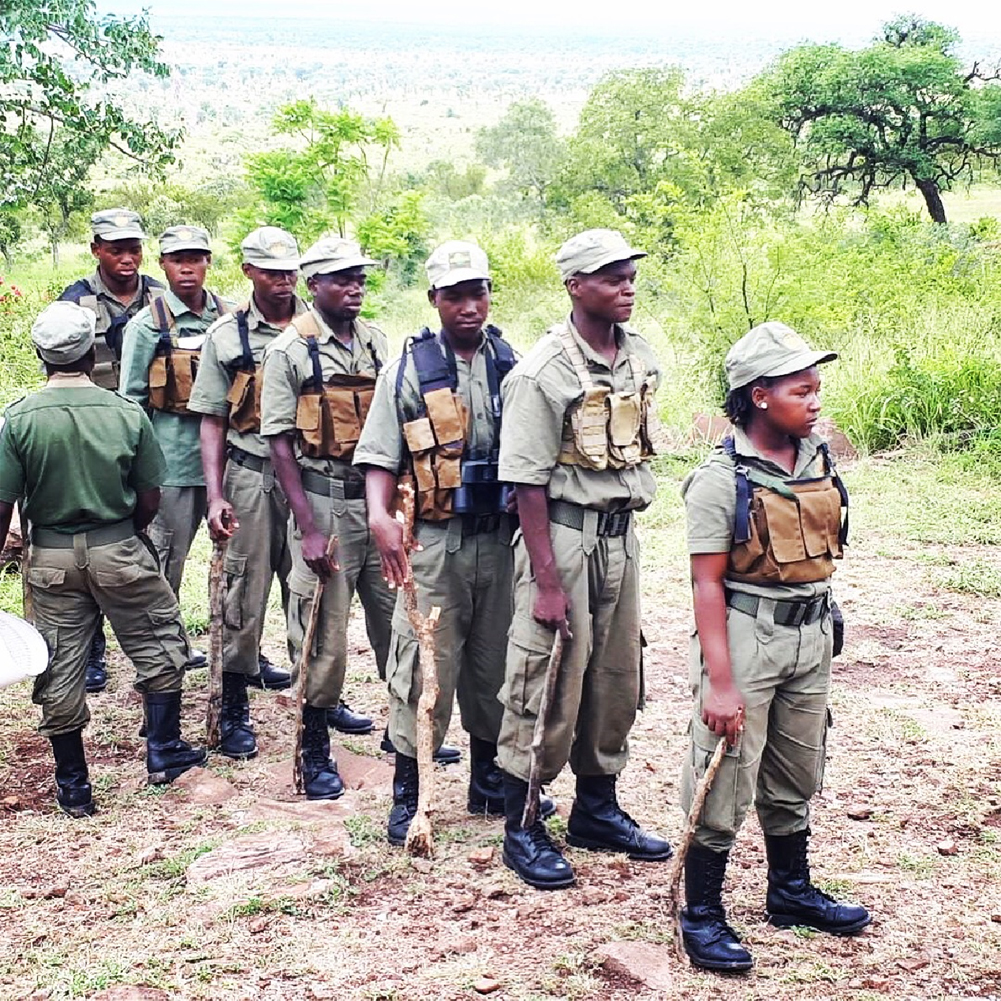
This counter poaching operation was in the Limpopo National Park Area of Mozambique across the border from Kruger National Park in South Africa. The primary focus was on deterring rhino poaching, however, it also benefited elephants and helped deter the bushmeat trade in the area. Reporting from 2018, documented 22 poaching incursions in the area, the arrest of seven individuals including four rhino/elephant poachers and three after illegal bushmeat poachers. In additional, four firearms were confiscated and 209 illegal snares were removed.
Save Valley Project
Species Involved: Elephant and Rhino
Project Partner: Save Valley Conservancy (SVC)
SCIF Investment: $25,000 (Funded by Hunter Legacy Fund)
SCIF Involvement: 2011-2018
The SVC is an approximately 3,500 km2 wildlife area in southern Zimbabwe and has populations of black and white rhinos, as well as elephants, lions, and African wild dogs. As with any area supporting rhinos and elephants, poaching is a serious issue and the SVC has a two-tier antipoaching system. Individual landowners in the conservancy support ranch scouts that patrol their properties and the SVC as a whole runs a highly trained, armed, and mobile Specialized Species Protection Unit (SSPU). The SSPU can respond to threats identified by ranch scouts or operate independently within SVC. The SSPU consists of 37 rangers with their vehicles and equipment plus four trained tracking dogs. In 2017, rangers arrested and provided information on the prosecution of four members from a poaching ring in the area. While in 2018, rangers respond to three incursions by organized rhino poachers. They also arrested and prosecuted one individual for poaching pangolin on the SVC. During operational support, it was reported that there had been reduced poaching mortality and increased annual population growth in both species at SVC.