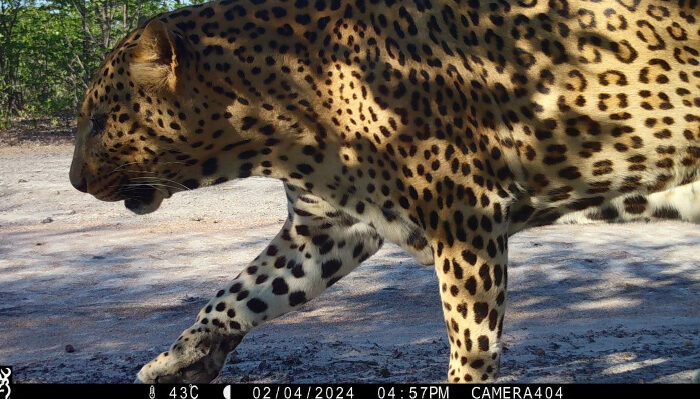
Groundbreaking research provides a science-based foundation for leopard conservation, sustainable management, and future monitoring.
SCI Foundation has completed the first national-scale assessment of leopard density and distribution across Botswana, providing critical new data to support science-based wildlife management.
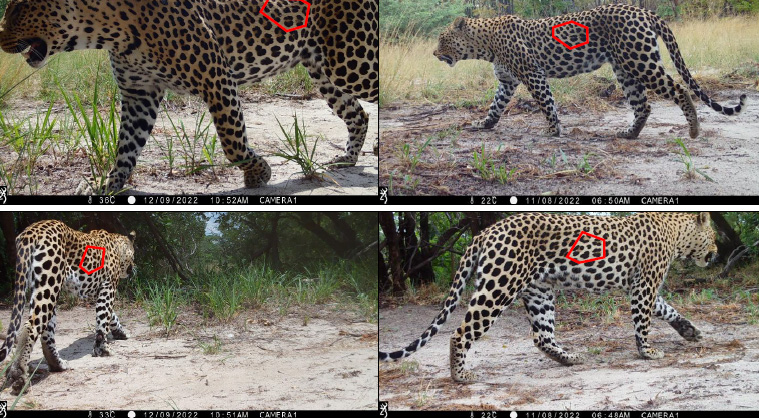 From September 2022 through December 2024, SCIF and its partners carried out an unprecedented field effort across Botswana, surveying 20 sites with more than 1,000 trail camera stations. Researchers recorded 1,424 leopard detections and identified 434 individual adult leopards, making this one of the most comprehensive leopard research efforts conducted in the country.
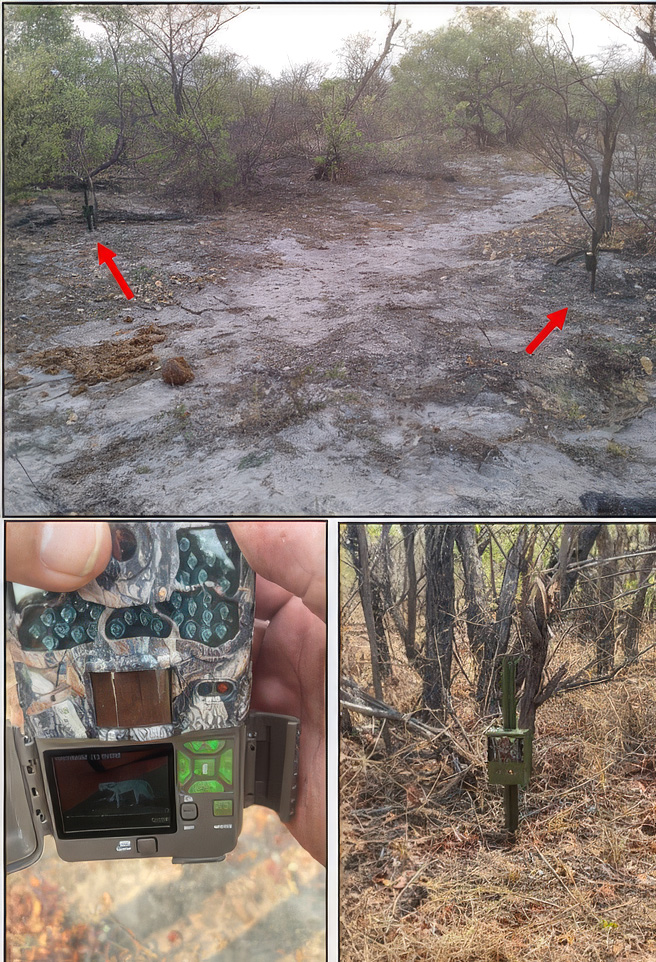 Following completion of the fieldwork, the data underwent rigorous scientific analyses to estimate leopard density, evaluate patterns in distribution, and better understand the ecological factors influencing leopard populations. This work culminated in the completion of the final report in August 2026, providing Botswana with a strong scientific foundation to support long-term leopard conservation and management.
The study estimated leopard density at 19 sites and found that abundance varied widely across Botswana, ranging from 0.15 to 2.74 leopards per 100 square kilometers. These results show why local data is essential for responsible management decisions, rather than relying on a single nationwide assumption.
Using the survey data, SCIF researchers also developed national maps of predicted leopard abundance and distribution. The model estimated Botswana’s leopard population at approximately 6,262 leopards, with a likely range of 5,676 to 6,849. The findings confirm that leopards remain widely distributed across Botswana while also identifying areas that may serve as important population strongholds and movement corridors.
Importantly, the study provides direct density estimates for 19 sites across the country, along with measures of certainty for each estimate. This gives wildlife managers practical, site-specific information that can help guide population management decisions while also providing a broader understanding of leopard abundance, distribution, and connectivity across Botswana.
The results offer a stronger scientific foundation for adaptive leopard management and sustainable quota-setting. Because leopard numbers differ considerably by region, management decisions can now reflect local population conditions, habitat quality, prey availability, previous harvests, problem-animal removals, and connectivity with neighboring leopard populations. The study also reinforces the importance of monitoring female density, as females are the reproductive foundation of leopard populations.
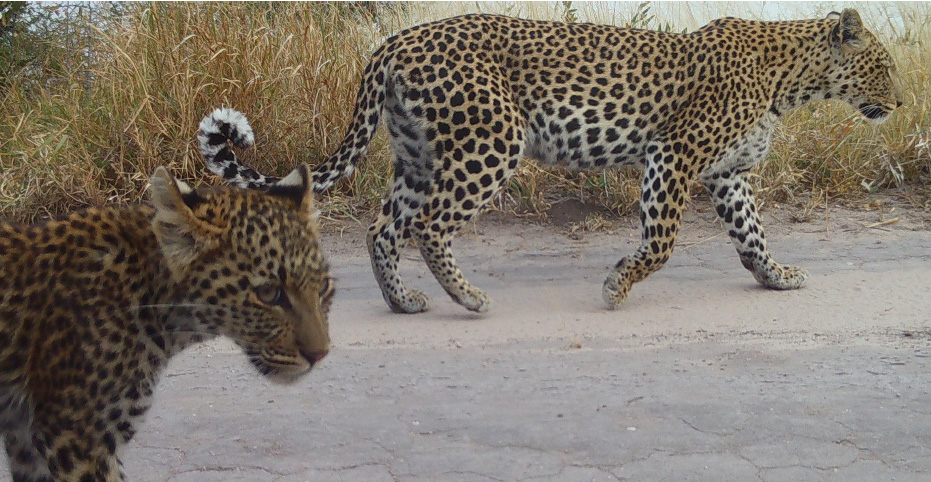 The project was made possible through the support of SCIF members and donors, whose contributions directly fund field research, advanced wildlife monitoring, and science-based conservation around the world.
“This research is an important step forward for leopard conservation and sustainable management in Botswana,” said Chris Comer, Director of Conservation SCI Foundation. “Thanks to the support of SCIF members and donors, wildlife managers now have stronger science, better site-specific data, and a national baseline that can guide informed decisions for years to come.”
The current study establishes a valuable baseline for future monitoring. Repeating standardized surveys over time will allow researchers and wildlife managers to determine whether leopard populations are stable, increasing, or declining, and adjust management strategies as conditions change. This adaptive approach ensures management decisions can respond to new evidence and continue supporting healthy leopard populations across Botswana.
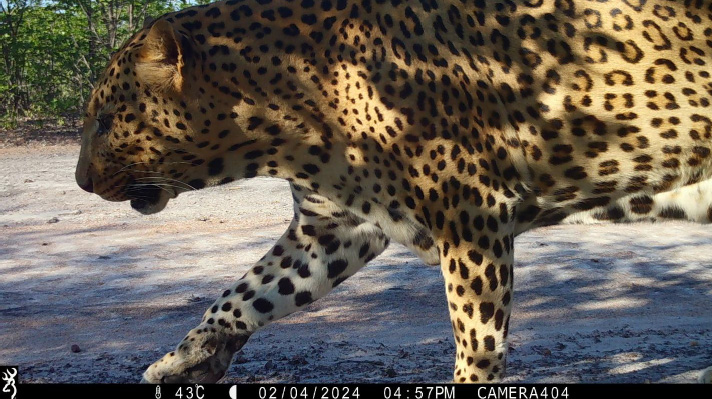 Through projects like this, SCI Foundation continues to advance its mission of supporting wildlife conservation, education, and sustainable use through sound science.
To view the Final Leopard Report click here.
ACKNOWLEDGEMENTS
Safari Club International Foundation (SCIF) gratefully acknowledges the many individuals, organizations, government agencies, and landowners whose support made the Botswana National Leopard Survey possible.
We particularly thank the Department of Wildlife and National Parks, Ministry of Environment and Tourism, Government of Botswana, for its collaboration, guidance, and support throughout the planning and implementation of the survey. We are especially grateful to the wildlife authorities and field personnel who assisted with permits, logistics, and coordination across the survey area.
We extend our sincere appreciation to the landowners, wildlife managers, conservancies, and communities who provided access to their properties and supported the deployment and operation of camera-trap stations. Their cooperation was essential to achieving the spatial coverage required for this national-scale assessment.
We also acknowledge the SCIF research and field teams for their dedication to the demanding fieldwork, camera deployment and retrieval, data management, individual leopard identification, and subsequent analysis. The successful completion of this project reflects their professionalism and commitment to rigorous, science-based wildlife conservation.
We thank the organizations, partners, and SCIF donors whose financial, logistical, and institutional support enabled SCIF to undertake this extensive research effort. Their investment in scientific research contributes directly to improving the knowledge available for leopard conservation and support sustainable management in Botswana.
Finally, we recognize the broader conservation and scientific community in Botswana for its continued commitment to leopard conservation and sustainable wildlife management. The information generated through this survey provides an important scientific baseline for future monitoring, management planning, and conservation decision-making.