SCI Member Justen Riley shares how a Blue Bag delivery in South Africa connected his experiences as a soldier, hunter and father through a simple act of giving.
Through the SCI Foundation Bell Family Blue Bag Program, hunters have the opportunity to make a direct, meaningful difference in the communities they encounter while traveling abroad. Filled with much-needed supplies and delivered personally, each Blue Bag carries more than what is packed inside. It represents a connection between people, cultures and communities.
For SCI Member Justen Riley, his first hunting trip to South Africa became an opportunity to continue a tradition of giving that began years earlier with an experience he never forgot. Below, Justen shares his Blue Bag story in his own words.
By Justen Riley, SCI Member 20454201
This was my first trip to hunt in South Africa, and while doing research and attending conventions, I kept seeing information about the “Blue Bag.” To my surprise, family members who had been to Africa before not only knew about the Blue Bag, but my father had participated in the program on a previous trip. I love the idea of donating to a cause with tangible results that you can see—not just the ever-popular “We will help some people, trust us” TV sales pitch.
While serving as a soldier in Iraq, I tried to deliver soccer balls to local children. I tossed a brand-new blue soccer ball to a little girl, and I saw a spark of sheer joy as she caught it, and then terror as she dropped to the ground to guard it from the other children who beat her in an attempt to take the ball for themselves. After my soldiers and I shouted the other children away, the little girl stood up, bloody and beaten, still clutching the ball. The look of pure joy returned to her face. This soccer ball was a small escape from war, something different. She expected the beating, and in the many years since that experience, I hope she remembers only what it felt like to have someone from across the world think of her happiness instead of their own. She was worthy of the time and energy of soldiers from the U.S. Army.
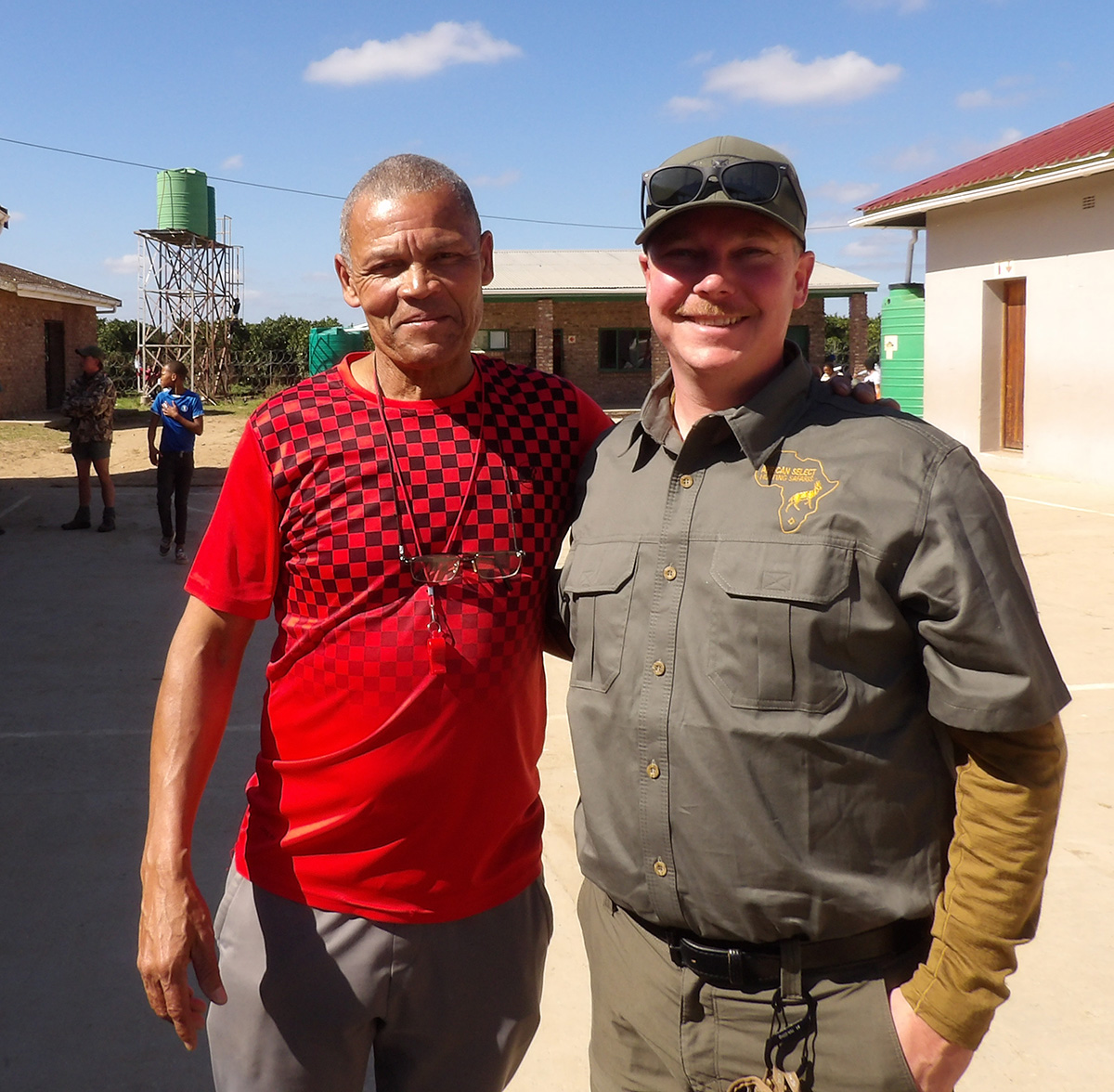
I consulted with my Professional Hunter (PH) to gather a better understanding of what a meaningful donation would be in South Africa. His mother recommended bringing sporting supplies for a small school where she volunteers her time reading to elementary-aged students. Again, a world away from home, children had a need for soccer balls.
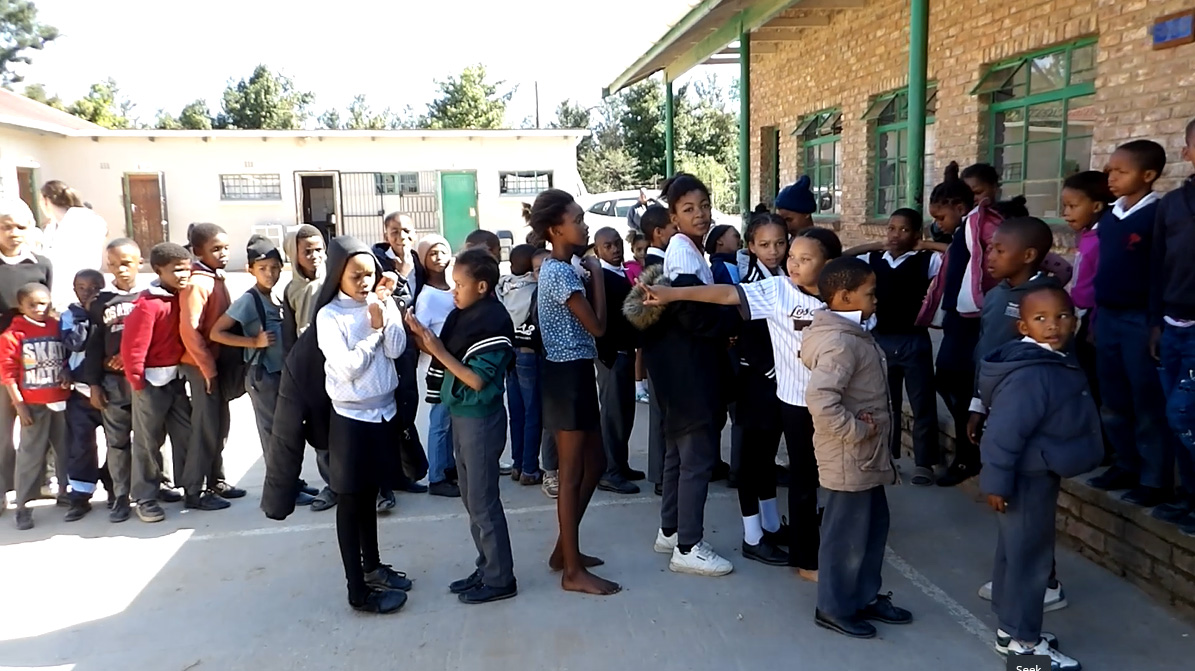
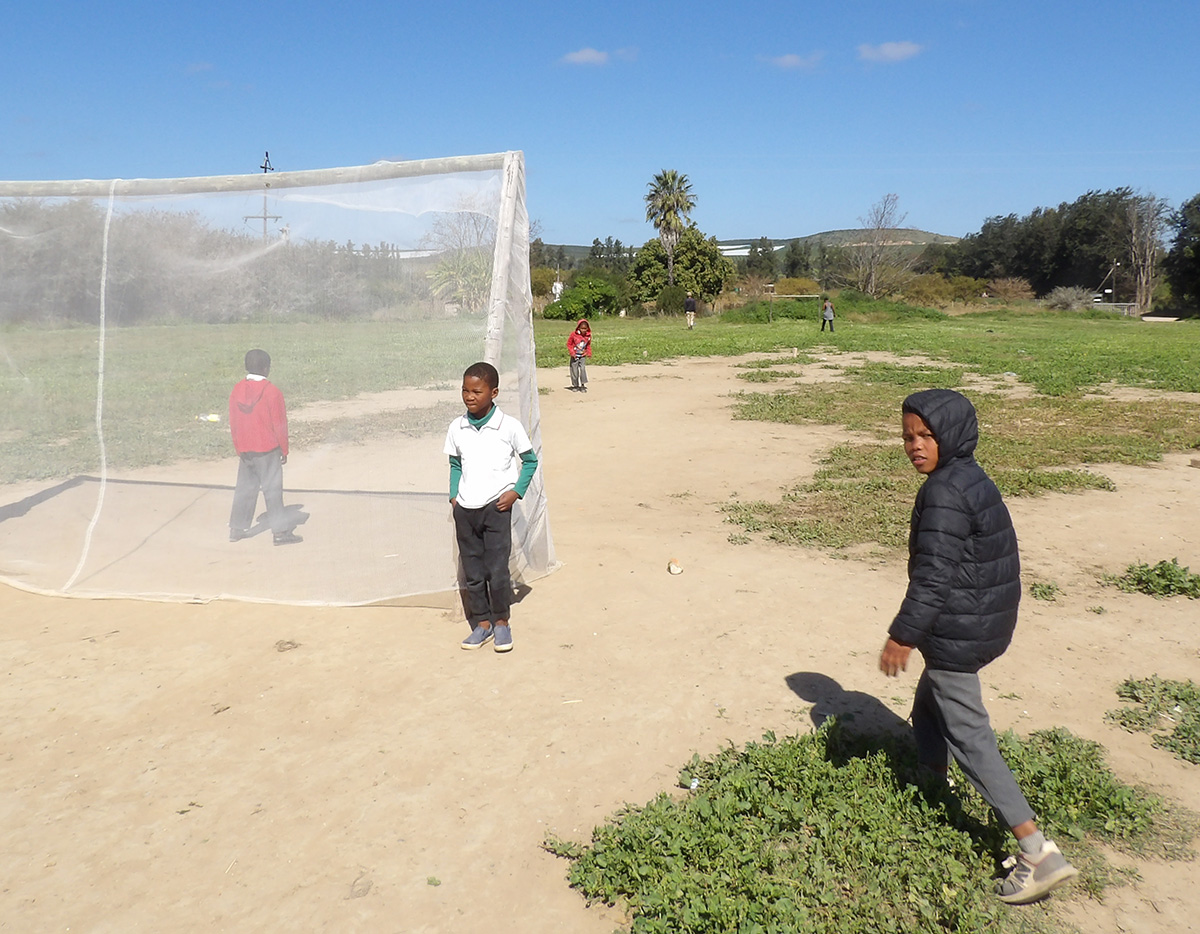
The school was named Mistkraal, which translates from Afrikaans to mean “Dungkrawl.” It consisted of several small buildings that protected a middle courtyard. Along the road to the school were open fields that were uneven and full of rocks and holes, capped on each end with makeshift nets for soccer. This school had no garbage collection and relied on burning trash and putting the rest in a pit out back.
It was explained to me that most of the fathers of these children were migrant workers from the local citrus farms and were not steady male role models for children they often did not know they had. Many mothers did not realize they were pregnant until they started to show and therefore did not receive appropriate prenatal care, leading to a higher rate of birth defects and fetal alcohol syndrome.
Despite the hardships these children were born into, they had structure to their school day, positive male role models in their headmaster and teachers, as well as friends to talk to and play sports with. Nothing for them had ever come easy, it seemed, and not many people had ever given them a handout.
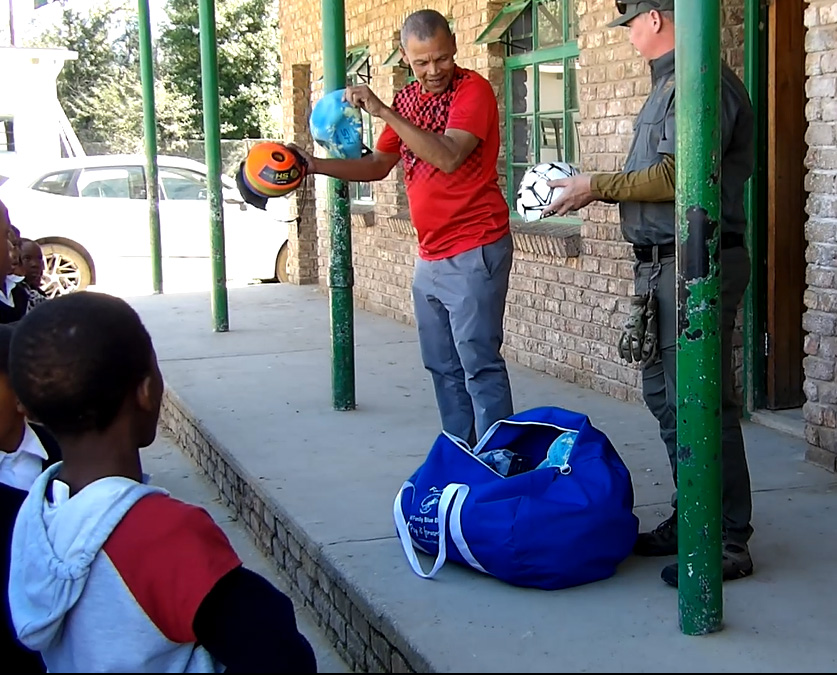
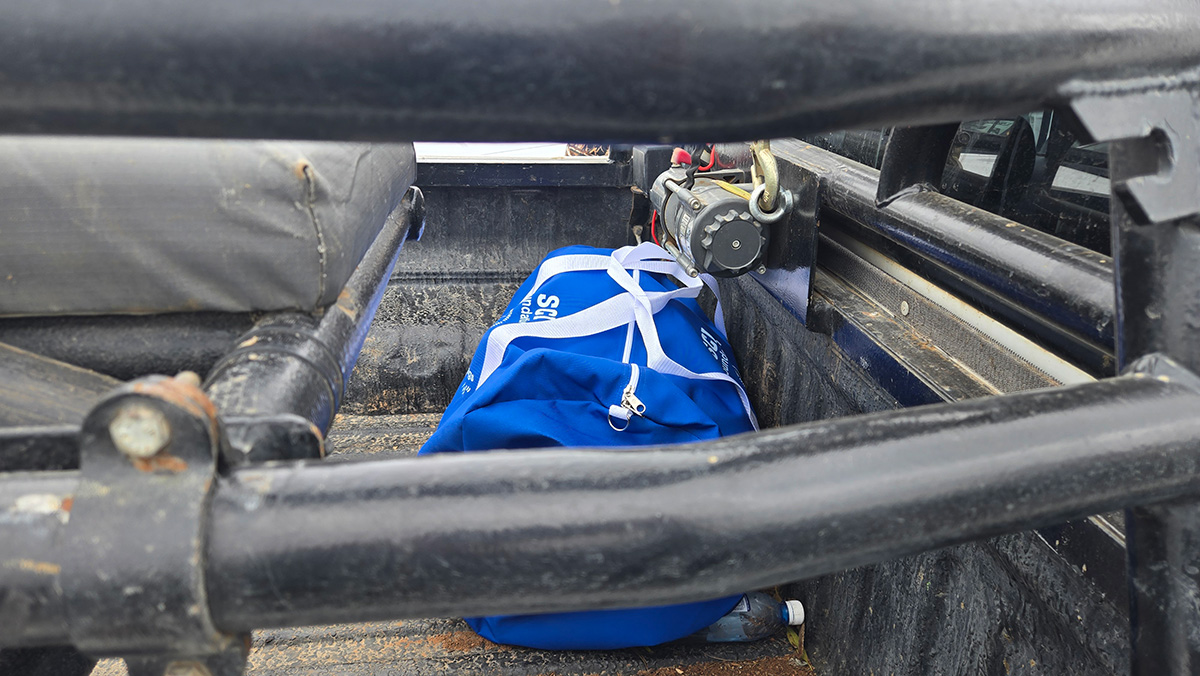
As a stark contrast to previous attempts to deliver soccer balls. I stood this time in front of lines of quiet and well-behaved children, smiling and whispering guesses of what might be inside an overly round blue bag. Many of the children were the same age as my youngest daughter of 10. Without speaking their languages, she would effortlessly make friends with only a smile and a hello. Using her insight, I smiled, said hello, and waved. The first ball that I pulled out of the bag was a blue soccer ball. Remembering the little girl from Iraq, I paused for a moment, then held it up for them to see.
I was inspired to provide them with sports equipment because sports can teach so many valuable lessons about life—simple lessons like hard work and practice paying off, or the power of working in a team. On a soccer field, inequity and the stresses of life can melt away, if only for a moment. I hope that in that moment, these children can feel like they are seen and that they are worthy of something as simple as a shiny new soccer ball. They are worthy of the time and energy of Mrs. Bernice from Kirkwood, who reads to them, and they are worthy of the time and energy of S.C.I. members from Minnesota and Kentucky.
With goodbyes exchanged, I returned to my hunt. While my gifts to the students were merely soccer balls and gym supplies, their gift to me was a powerful memory of a community defined by its commitment to humanity.
As a young soldier, I knew the freedom that sports could provide; however, now as a father, I have a deeper understanding of how a simple act of kindness can alter a trajectory in life. Soon after my trip, I received a picture of the students with their new equipment. They stood with one blue soccer ball, one blue handball, and a look of pure joy still on their faces.
Thank you for facilitating the Blue Bag program and allowing hunters like myself to make a meaningful, hands-on difference.
Sincerely,
Justen Riley
SCI Member 20454201
Carry a Blue Bag. Make a Difference.
The SCI Foundation Bell Family Blue Bag Program gives hunters and travelers an opportunity to personally deliver needed supplies to communities around the world. Justen’s experience is one example of how something simple can create a connection that lasts long after the journey home. Learn how you can participate by visiting the SCI Foundation Bell Family Blue Bag Program or by emailing [email protected].