Predator Prey Research
Michigan Predator Prey Project
Project Partners: Mississippi State University, Michigan Department of Natural Resources, Michigan SCI Chapters
SCIF Investment: $500,000 + with partial funding from the Hunter Legacy Fund and SCI Michigan Chapters
SCIF began involvement: 2008-2020
Project Objectives
- Estimate white-tailed deer population trends and productivity in northern Michigan.
- Determine the impact of predation on fawns and adults over multiple years.
- Examine spatial and ecological relationships between deer and their primary predators in region, including black bears, bobcats, coyotes, and wolves.
Anticipated Outcomes
Since its inception in 2008, the Michigan predator-prey project has become one of our flagship projects in North America. We have defined the relative importance of various predators (including black bears, bobcats, coyotes, and wolves), winter severity and habitat quality in white-tailed deer survival and productivity. The lessons learned have influenced harvest regulations and forest management to benefit deer in Michigan. This project was recognized for its influence on deer management by the Michigan DNR and led to the formation of the Upper Peninsula Habitat Workgroup.
Recent Project Update
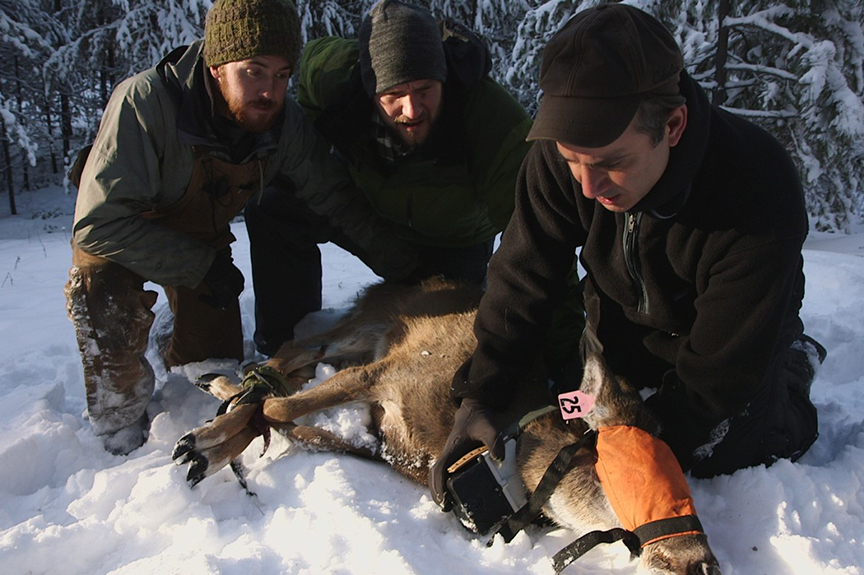
Recently, researchers attended a strategy meeting in Michigan to get a first-hand report on the project. The most recent updates showed that during the spring period, they captured and collared 48 neonatal white-tailed deer. They observed 7 mortalities (2 coyote predations, 2 from bears, 1 by a wolf, 1 unknown predator, and 1 natural causes), but the vulnerable period had not passed at the end of the reporting period. They also captured 12 wolves, 3 coyotes, 1 bobcat, and 5 black bears, conducted grouse drumming surveys, snowshoe hare pellet surveys, and surveyed black bears using hair snares. SCIF and the HLF continue to support the Michigan Predator-Prey project, contributing $20,000 in FY2019.
Want to see how a biologist finds fawns in the field? Watch this video – https://youtu.be/xv3K0xHx3To